
The Kemetic Prayer: Part 4
The Midnight Prayer
“Hail unto Thee Who art Khephra in Thy hiding, Even unto Thee who art Khephra in Thy silence, Who travellest over the Heavens in Thy bark At the Midnight Hour of the Sun. Tahuti standeth in his Splendour at the prow And Ra-Hoor abideth at the helm. Hail unto Thee from the Abodes of Evening.”
Khephra—Khepri—the scarab, kheper, He Who Becomes. Not the sun that is seen, named, or adored, but the sun in its most radical state: the sun in process. The god at midnight is not absent; he is condensed. He is potential folded into itself, life drawn back to seed. What appears as disappearance is, in Egyptian metaphysics, an act of supreme concentration.
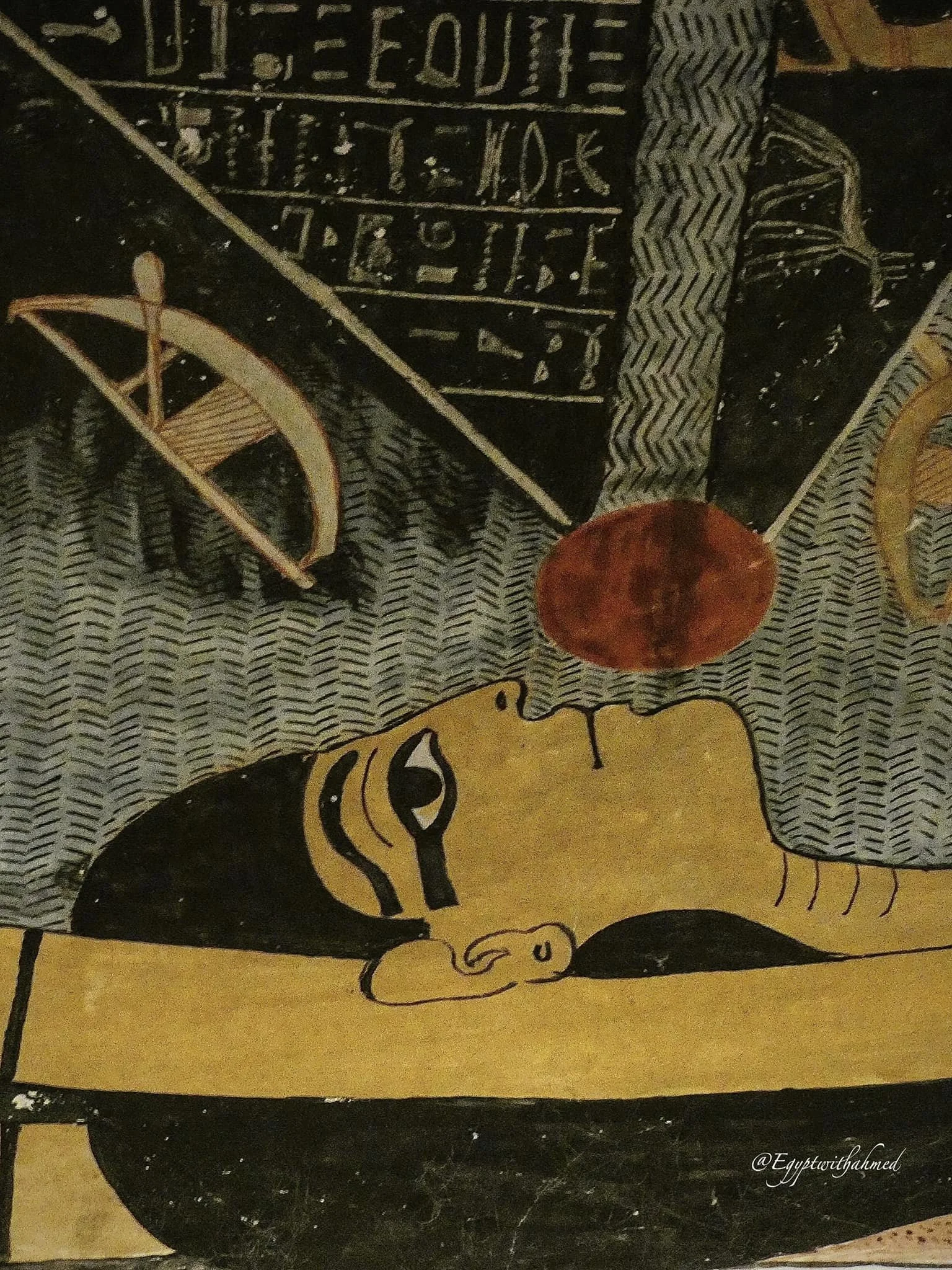
At midnight Ra is neither manifest nor radiant. He has withdrawn from visibility into the most interior chamber of being. The hieroglyph jmn (hiddenness) does not signify lack but plenitude too dense for the eye. This is Amun-Ra before the “Ra” emerges, divinity before articulation. Like the word before speech, the embryo before breath, the blackened matter before it stirs, Khephra marks the precise point where becoming replaces being.
Alchemically, this is putrefaction completed and regeneration begun. The nigredo has done its work. What remains is not decay but fertility; darkness seeded with future light.
The bark still travels “over the Heavens” at the midnight hour. This is not poetic contradiction but cosmological precision. The Duat is not beneath the world; it is within the celestial body of Nut. What the uninitiated call underworld, the Egyptian priest recognised as another heaven; an interior sky.
At midnight the sun passes through the cavern of Sokar, the lake of fire, the mound of first creation. He is deepest in the goddess, enclosed by her body, re-entering the womb of the cosmos itself. The heavens have inverted. Exterior light has become interior gestation. From the day-world’s perspective this is descent; from the initiatory perspective it is passage through the hidden firmament.
Psychologically, this corresponds to the deepest strata of the psyche: dream, ancestral memory, grief, trauma, the imaginal zones where biography dissolves and myth resumes command. The bark is now the subtle body, ferrying the essence of lived experience through a region where conscious control cannot follow. Nothing appears to happen, yet everything essential is underway.
At the prow stands Tahuti, Thoth, in splendour, but it is no longer the brilliance of articulated intellect. It is the light of mind without object, logos returned to seed. He measures the remaining hours of darkness, not to hasten dawn, but to preserve order within opacity. This is gnosis without language, knowledge that operates while speech is impossible.
At the helm abides Ra-Hoor. Will has not abandoned the journey because sight has failed. It has merely changed mode. No longer expansive or conquering, it becomes concentrated, enduring, faithful without reassurance. This is sovereignty at its most refined: the capacity to remain intact through unknowing, to steer through ego-death without prematurely forcing meaning.
Their presence through all four prayers now reveals its full significance. Consciousness and will are the constants; the form of divinity encountered is the variable. You bring the same mind and the same steering to each hour, but each hour reshapes you. By midnight, these faculties have been tempered to survive darkness itself.
The voice now speaks “from the Abodes of Evening.” This is crucial. Midnight is not severed from sunset; it is its consummation. Joy has ripened into silence. Completion has yielded to concealment. You have followed the sun all the way down, crossing the threshold where form dissolves and certainty evaporates.
This is the most dangerous phase of the journey. Here Ra is vulnerable. Apophis attacks. The solar bark must be defended by magic, by remembrance, by fidelity to the pattern. Hermetically, this is solve without immediate coagula: dissolution endured without proof of return.
Yet the prayer itself supplies the guarantee. By addressing Khephra, you invoke becoming as law. The scarab pushes the solar disk precisely because it is dark. Becoming requires the hidden. The future is generated not in light, but in silence.
If dawn corresponds to sublimation (air), noon to fixation (fire), sunset to fermentation (water), then midnight is earth: the sealed darkness, the seed buried in ground. This is nigredo yielding toward albedo, the blackness beginning to reflect, preparing the way for gold.
In the full alchemical cycle, this hour precedes the aurora consurgens, the rising dawn. The Egyptian fourfold compresses the work with ruthless elegance. Khephra is the aurora in potential—the promise that the ring will close, that Ra will rise again transformed.
You have now spoken from every quarter of the solar mystery:
Dawn: emerging from death
Noon: receiving manifestation
Sunset: completing manifestation
Midnight: entering death consciously
The cycle is initiatory. Each prayer presumes the last has been lived. The one who prays at midnight is no longer the one who greeted Ra at dawn. He has been altered by beauty, ripened by joy, stripped by completion, and now hides in silence with the becoming god.
Khephra’s silence is not emptiness. It is prima materia at its most potent: unmanifest, undifferentiated, gravid with worlds. To pray at midnight is not to invoke what exists, but what will exist, and in that invocation, you participate in its genesis.
This is the Egyptian genius: a technology of temporal transformation. By aligning consciousness with the sun’s phases, the practitioner becomes the solar journey itself, compressing eternity into lived hours. The hiding is your hiding. The silence is your silence. The becoming is your becoming.
And those who can remain faithful at midnight, without demanding dawn, have already learned the deepest secret of the sun.




Disclaimer:
AI was used as a neurodivergent aid tool for editing and reflection; all synthesis, interpretation, and voice remain fully my own.
